Can an Injured Employee Return to Work Before They’re Fully Recovered?
When an employee suffers a workplace injury, many employers assume they must wait until that person has completely recovered before allowing them back to work. But under Tasmania’s workers’ compensation arrangements, that isn’t necessarily the case.
In fact, helping an injured employee return to suitable work while they recover can benefit both the employee and the business. The important question isn’t simply whether they’re fully recovered. It’s whether they can return safely.
Can Someone Work While They’re Still Recovering?
Yes. An injured employee doesn’t always need to be completely symptom-free or have finished medical treatment before returning to work.
For example, a warehouse employee recovering from a shoulder injury might be unable to lift heavy boxes but perfectly capable of checking stock records or completing administrative tasks.
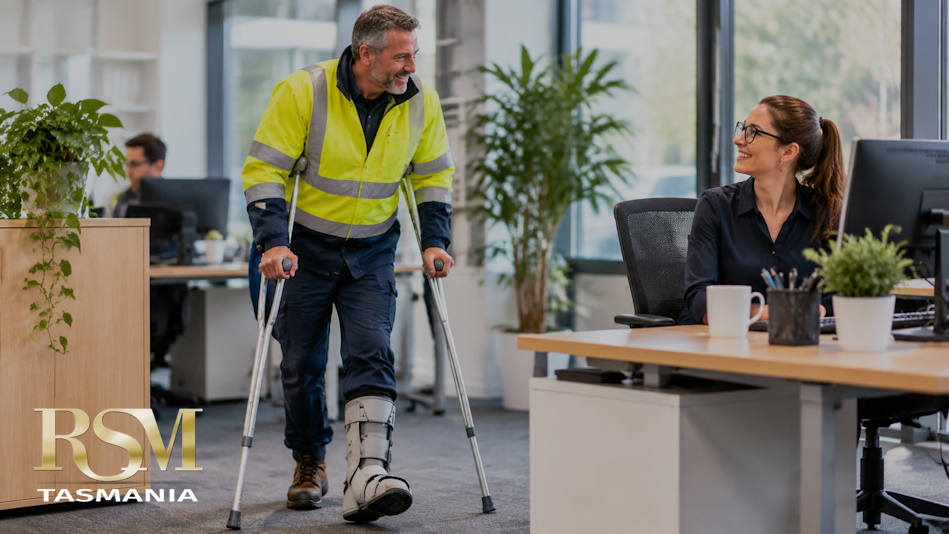
Similarly, someone recovering from a leg injury may be able to perform seated duties while temporarily avoiding prolonged standing or walking.
The key is ensuring any work undertaken aligns with medical advice and doesn’t put the employee at risk of further injury.
What Are Suitable Alternative Duties?
Under Tasmania’s workers compensation legislation, employers generally have an obligation to provide suitable alternative duties when an injured employee cannot perform their normal job.
These duties must be meaningful, appropriate to the employee’s abilities and consistent with any medical restrictions.
They might involve reduced physical activity, modified tasks, different responsibilities or adjusted working hours.
However, assigning an injured employee whatever work happens to be available isn’t necessarily appropriate.
Employers should consult the employee and their treating doctor when identifying suitable duties. If providing suitable alternative duties is unreasonable or impracticable, the employer must explain the reasons in writing.
Why Is an Early Return to Work Important?
Being away from work for an extended period can affect more than someone’s income.
Employees may lose confidence, feel disconnected from their colleagues or become concerned about their future employment.
A carefully managed return to work can help maintain workplace relationships, restore confidence and support recovery.
WorkSafe Tasmania encourages early injury management because returning to suitable work, when medically appropriate, can improve the chances of a successful and lasting return.
Of course, returning early should never mean returning before it’s safe.
What Should Employers Do Before an Employee Returns?
Good communication is essential.
Employers should understand the employee’s medical restrictions, identify appropriate tasks and ensure everyone involved knows what the employee can and cannot do.
For significant injuries, a formal return to work plan or injury management plan may be required.
These arrangements should involve the injured employee, relevant medical professionals and the insurer or injury management co-ordinator where applicable.
And remember, recovery isn’t always a straight line. Duties may need to change as the employee’s condition improves or new medical advice becomes available.
How Does Workers Compensation Insurance Fit In?
Workers Compensation Insurance Tasmania employers arrange is about more than responding to the initial injury.
The workers compensation system also includes processes designed to support treatment, rehabilitation and a safe return to employment.
Understanding these responsibilities before an injury occurs can make an already difficult situation easier to manage.
For official guidance, visit WorkSafe Tasmania’s information for employers on getting injured workers back to work.
A Safe Return Is a Successful Return
The goal isn’t to get an injured employee back to work at any cost. It’s to help them return safely, productively and with the right support.
For Tasmanian employers, understanding suitable duties and return-to-work responsibilities is an important part of managing workplace injuries.
And if you’re reviewing your broader workplace safety and insurance arrangements, our colleagues at RSM Tasmania Insurance Brokers have more information about preparing your business for the unexpected.
Because looking after an injured employee doesn’t end when the accident is over.
Remember, this article is general in nature and doesn’t take into account your specific objectives, financial situation, or needs. For advice tailored to your circumstances, have a chat with us at RSM Tasmania Insurance Brokers Hobart.
Talk to Roger Hosie and stay ahead with our Workers Comp insights.
Call Now! (03) 6244 7854, or email roger@wcomptas.com.au.
You can also follow RSM Tasmania on Facebook and LinkedIn for regular business insights.